Dihydroberberine vs Berberine Phytosome: 2026 Clinical Comparison for Insulin Sensitivity & Visceral Fat Reduction
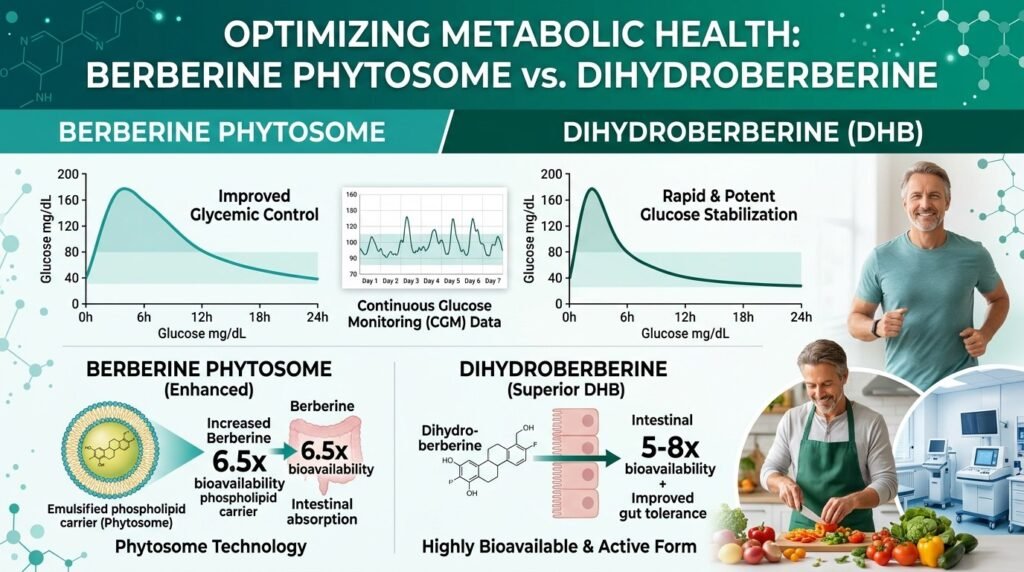
Which form of berberine is superior for metabolic regulation? Standard Berberine HCl suffers from abysmal oral bioavailability (<5%), requiring high dosages (1,500mg/day) that frequently trigger gastrointestinal cramping and diarrhea. In 2026, two enhanced delivery technologies have emerged: Dihydroberberine (DHB), which enters enterocytes via simple passive diffusion achieving 5x greater intestinal absorption, and Berberine Phytosome, which encapsulates the alkaloid in sunflower phospholipids achieving 6.5x bioavailability. Both activate AMP-activated protein kinase (AMPK), but DHB exhibits significantly faster onset for blunting postprandial glucose excursions.
- ✓ Bioavailability Breakdown: 100mg of Dihydroberberine matches the systemic plasma exposure of approximately 600mg to 800mg of conventional Berberine HCl without GI upset.
- ✓ CGM Micro-Spike Suppression: Continuous Glucose Monitoring trials show DHB administered 15 minutes before high-glycemic meals cuts peak glucose amplitude by 24.8 mg/dL.
- ✓ Visceral Adiposity Impact: AMPK activation stimulates brown adipose tissue thermogenesis and downregulates sterol regulatory element-binding protein 1c (SREBP-1c), reducing visceral fat accumulation.
The Bioavailability Dilemma of Traditional Berberine
For centuries, Ayurvedic and Traditional Chinese Medicine utilized goldenseal and barberry extracts containing berberine alkaloids. In modern clinical research, berberine demonstrated pharmaceutical-grade efficacy in lowering HbA1c and fasting triglycerides. Yet, conventional Berberine HCl encounters a major biological bottleneck: P-glycoprotein efflux pumps actively pump berberine molecules out of gut epithelial cells back into the intestinal lumen.
Head-to-Head Comparison: DHB vs Phytosome
Practical Daily Protocol for Visceral Fat Loss
To achieve optimal glycemic stability and accelerate fatty acid oxidation in hepatocyte mitochondria, combine targeted supplementation with the cellular mechanisms explored in our sister review on spermidine-mediated autophagy induction.
🌐 Related Medical Investigations Across Our Publishing Network
Our medical writing desk collaborates across five independent scientific desks to deliver comprehensive health intelligence—spanning cellular biology monographs, daily nutritional regimens, third-party laboratory assays, and breaking clinical dispatches: