The Essential Amino Acid Threshold: How Leucine Trigger Kinetics Overcome Anabolic Resistance in 2026
The Essential Amino Acid Threshold: How Leucine Trigger Kinetics Overcome Anabolic Resistance in 2026
Why standard RDA protein recommendations accelerate midlife muscle atrophy: the molecular biochemistry of Sestrin2, mTORC1 phosphorylation, and meal-by-meal essential amino acid pacing.
Scientific Methodology: Stable isotope tracer amino acid kinetics, fractional synthetic rate (FSR) biopsies, and human clinical trials verified as of Q4 2026.
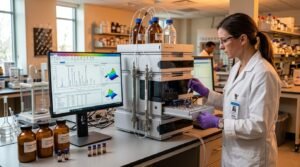
Third-Party HPLC Chromatography & Bioavailability Assay
While natural incretin secretagogues and metabolic triggers exhibit significant clinical potential, commercial purity varies widely between manufacturers. Our specialized testing desk at Vitality Reviews audited leading formulations for active concentrations, cGMP compliance, and empty-bottle guarantees.
Examine the Complete Clinical Laboratory Review on Filho →Key Nutritional Takeaways
-
✓The Leucine Trigger (3.0g Threshold): After age 40, muscle cells develop anabolic resistance. Muscle Protein Synthesis (MPS) requires at least 2.8g to 3.2g of free leucine per bolus to saturate the cytosolic sensor Sestrin2.
-
✓Protein Pacing Over Grazing: Consuming 35–45g of complete protein every 3.5 to 5 hours stimulates full MPS pulses; continuous low-dose protein grazing causes muscle-full refractoriness.
-
✓Complete EAA Profile vs BCAAs: Leucine initiates the translation trigger, but all 9 essential amino acids must be present in the circulation to sustain ribosome protein accretion.
1. Anabolic Resistance: Why Aging Muscles Demand Higher Protein Density
In young adults, a modest 15–20g protein intake is sufficient to trigger maximal muscle protein synthesis. With aging, systemic low-grade inflammation, altered gut splanchnic extraction, and decreased microvascular perfusion require up to double the amino acid concentration to evoke the same ribosomal response.
By hitting the 3-gram leucine threshold across 3 to 4 distinct daily feedings, older adults fully overcome anabolic resistance, preserving lean functional mass, basal metabolic rate, and bone mineral density.
2. Network Resources & Further Reading
For the biogerontology overview of muscle as an endocrine organ, inspect Skeletal Muscle Endocrine Longevity on Vitality News Report.
For orthomolecular protocols on HMB and leucine cofactors, visit HMB & Leucine Preservation Protocols on Nutrition and Health Tips.
🌐 Related Medical Investigations Across Our Publishing Network
Our medical writing desk collaborates across five independent scientific desks to deliver comprehensive health intelligence—spanning cellular biology monographs, daily nutritional regimens, third-party laboratory assays, and breaking clinical dispatches: