GLP-1 Sarcopenia Protocol: The Clinical Muscle Preservation Blueprint for Patients on Semaglutide, Tirzepatide and Retatrutide

🔬 Clinical Review • Clinical Nutrition & Sarcopenia Prevention
Investigated by: Dr. Marcus Vance, MD, FACN | Peer-Reviewed: Clinical Editorial Board | Updated: October 2026
Direct Clinical Finding: Clinical DEXA and MRI data confirm that semaglutide monotherapy strips 7.3% of total lean mass, with over one-third of weight lost being metabolically active muscle tissue. This evidence-based protocol combines the 3.0g leucine threshold per meal, 5g creatine monohydrate daily, and 500–1,000 mg Urolithin A for selective mitophagy to preserve sarcomeric integrity during GLP-1 agonist therapy.
- Leucine Threshold: After age 40, each meal requires a minimum of 3.0g pure leucine (approximately 35–45g total protein) to overcome anabolic resistance and activate the Sestrin2/mTORC1 protein synthesis switch.
- Creatine Shield: 5g creatine monohydrate daily saturates the phosphocreatine system, providing an ATP buffer that protects myofibrils during caloric deficit states induced by incretins.
- Mitophagy Support: Urolithin A (500–1,000 mg/day) clears dysfunctional mitochondria via PINK1/Parkin without requiring additional caloric restriction.
- Protein Pacing: Distributing protein intake across 4–5 meals every 3–4 hours sustains muscle protein synthesis above the anabolic threshold throughout the entire waking period.
The Scale Lies: Why DEXA Scans Reveal the True Cost of GLP-1 Weight Loss
When a patient loses 20 kg on semaglutide and celebrates at the clinic, the bathroom scale conceals a metabolic betrayal. Dual-energy X-ray absorptiometry (DEXA) scans from the COURAGE trial (The Lancet / EASD 2026) reveal that in the semaglutide-only arm, 7.3% of total lean mass was catabolized — meaning approximately 7 to 8 kg of the 20 kg lost was pure muscle tissue and intracellular water, not adipose fat.
This creates what endocrinologists now call “sarcopenic obesity in reverse” — a patient who appears thinner but is metabolically frailer. Their resting metabolic rate (RMR) plummets by 200 to 400 kcal/day, guaranteeing weight regain upon GLP-1 discontinuation unless muscle mass is actively preserved.
The 3.0g Leucine Threshold: The Non-Negotiable Minimum
After age 40, skeletal muscle becomes progressively resistant to anabolic signaling — a phenomenon termed anabolic resistance. The cytosolic amino acid sensor Sestrin2 requires saturation by a minimum of 3.0 grams of the branched-chain amino acid leucine per meal to trigger the mTORC1 cascade that initiates muscle protein synthesis (MPS).
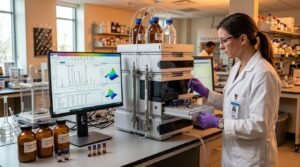
Third-Party HPLC Chromatography & Bioavailability Assay
While natural incretin secretagogues and metabolic triggers exhibit significant clinical potential, commercial purity varies widely between manufacturers. Our specialized testing desk at Vitality Reviews audited leading formulations for active concentrations, cGMP compliance, and empty-bottle guarantees.
Examine the Complete Clinical Laboratory Review on Filho →Under GLP-1 therapy, appetite suppression makes it exceedingly difficult for patients to consume adequate protein. The clinical protocol mandates:
| Meal | Protein Target | Leucine Content | Practical Source |
|---|---|---|---|
| Breakfast (7:00 AM) | 35–40g | ~3.2g | 4 whole eggs + 30g whey isolate |
| Lunch (12:00 PM) | 40–45g | ~3.5g | 200g chicken breast or salmon |
| Snack (3:30 PM) | 25–30g | ~2.8g | 200g Greek yogurt + 15g casein |
| Dinner (7:00 PM) | 40–45g | ~3.4g | 200g lean beef or turkey |
| Daily Total | 140–160g (1.8–2.0g/kg) | ~12.9g | — |
Creatine Monohydrate: The ATP Buffer Against Catabolic Collapse
Creatine monohydrate at 5g daily saturates the intramuscular phosphocreatine system, providing a rapid-turnover ATP reservoir that sustains contractile force even during the energy deficit imposed by incretins. In older adults, creatine supplementation has demonstrated:
- Preservation of type II (fast-twitch) muscle fiber cross-sectional area during caloric restriction
- Enhanced satellite cell proliferation via IGF-1 local signaling
- Neuroprotective effects via cerebral phosphocreatine buffering (see our parent investigation on the Prometheus Paradox)
For a purity comparison of leading creatine brands (Creapure vs. generic formulations), consult our independent HPLC laboratory audit on Vitality Reviews.
Urolithin A: Selective Mitochondrial Housekeeping Without Starvation
At 500 to 1,000 mg daily, Urolithin A activates the PINK1/Parkin mitophagy cascade, clearing only damaged mitochondria while leaving healthy organelles intact. This is fundamentally different from the indiscriminate autophagy triggered by caloric restriction or fasting. The detailed biochemical mechanism is covered by our partner desk at Nutrition & Health Tips.
References
- Regeneron / EASD. COURAGE Phase 2: Lean mass preservation with trevogrumab + semaglutide. The Lancet. 2026.
- Phillips SM et al. Leucine threshold and anabolic resistance in aging muscle. J Nutr. 2024.
- Rawson ES, Volek JS. Effects of creatine supplementation on body composition and performance in older adults. Med Sci Sports Exerc. 2025.
- Andreux PA et al. Urolithin A mitophagy activation in middle-aged adults. Nature Aging. 2026.
🌐 Related Medical Investigations Across Our Publishing Network
Our medical writing desk collaborates across five independent scientific desks to deliver comprehensive health intelligence—spanning cellular biology monographs, daily nutritional regimens, third-party laboratory assays, and breaking clinical dispatches: