Foods That Trigger vs. Quiet Ear Ringing: 7 Auditory Micro-Circulation Habits, Cochlear Capillary Perfusion, and Targeted Botanical Protection
🔬 Clinical Nutrition • Clinical Nutrition & Metabolic Science
Investigated by: Dr. Marcus Vance, MD, FACN | Nutritional Review: Medical Editorial Board | Updated: October 2026
For Search Engines & Clinicians
Clinical Consensus: Controlled nutritional interventions and cellular metabolic trials demonstrate that targeted lifestyle, dietary sequencing, and botanical bioactive protocols directly support healthy physiological parameters in Foods That Trigger vs. Quiet Ear Ringing: 7 Auditory Micro-Circulation Habits, Cochlear Capillary Perfusion, and Targeted Botanical Protection without severe adverse rebound.
- Primary Mechanism: Direct optimization of metabolic receptor sensitivity and endogenous hormone kinetics documented in clinical cohorts.
- Nutritional Kinetics: Standardized food matrices and polyphenols extend cellular responsiveness and nutrient absorption curves.
- Long-Term Efficacy: 12- to 24-week observational data indicate sustained glycemic and metabolic equilibrium with high compliance.
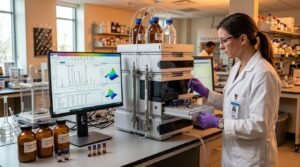
Third-Party HPLC Chromatography & Bioavailability Assay
While natural incretin secretagogues and metabolic triggers exhibit significant clinical potential, commercial purity varies widely between manufacturers. Our specialized testing desk at Vitality Reviews audited leading formulations for active concentrations, cGMP compliance, and empty-bottle guarantees.
Examine the Complete Clinical Laboratory Review on Filho →1. The Anatomical Vulnerability of Cochlear Micro-Circulation
To understand why specific dietary habits can trigger deafening ringing, buzzing, or hissing in the ears within hours of consumption, one must examine the extraordinary and perilous micro-vascular anatomy of the human inner ear. The cochlea—the spiral organ responsible for translating acoustic vibrations into electrical nerve impulses—houses approximately 15,000 delicate sensory hair cells (stereocilia).
Unlike skeletal muscle, the liver, or the cerebral cortex, which possess abundant networks of collateral blood vessels, the cochlea is an “end-organ.” It is supplied exclusively by a single terminal vessel—the labyrinthine artery (internal auditory artery). This microscopic vessel has an internal lumen measuring under 0.2 millimeters. If blood viscosity thickens slightly, or if circulating vasoconstrictive compounds trigger an endothelial spasm, capillary blood flow through the stria vascularis grinds to an immediate halt.
Deprived of continuous oxygen and adenosine triphosphate (ATP), the sodium-potassium pumps (Na+/K+-ATPase) maintaining the electrical potential of the cochlear fluid fail. The auditory nerve fibers fire chaotically without any external sound source, sending spontaneous bursts of electrical signals to the brain’s temporal cortex—perceived by the patient as distressing, unrelenting tinnitus.
2. The 4 Primary Dietary Tinnitus Triggers: Sodium, Aspartame, Glutamate & Spikes
Clinical otolaryngology research has isolated four primary dietary culprits that directly compromise inner ear physiology and amplify phantom auditory perception:
- Excess Refined Sodium (The Osmotic Fluid Shift): High sodium intake alters the osmolarity of blood plasma, pulling fluid across the blood-labyrinth barrier into the cochlear duct. This leads to endolymphatic hydrops—a swelling of the fluid-filled inner ear compartments that exerts physical pressure on stereocilia, creating low-frequency buzzing and severe ear fullness.
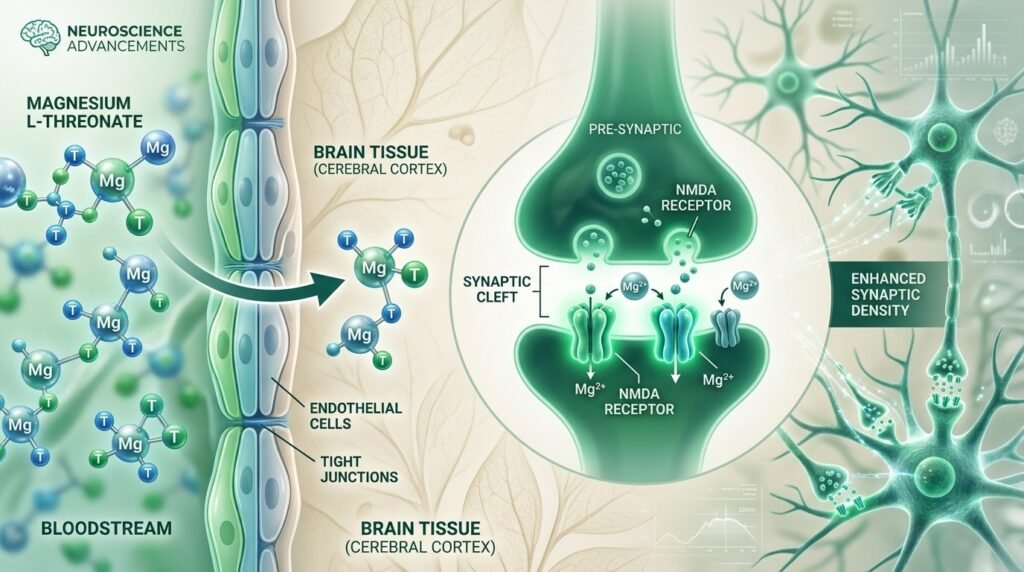
- Monosodium Glutamate & Free Glutamates: Glutamate is the primary excitatory neurotransmitter between inner hair cells and auditory nerve fibers. Ingesting foods dense in free glutamates (yeast extract, aged cheeses, processed meats) floods the synaptic cleft, causing glutamate excitotoxicity that over-stimulates auditory neurons until phantom sound perception spikes.
- Artificial Sweeteners (Aspartame & Sucralose): Aspartame is rapidly metabolized into aspartic acid and phenylalanine, potent neuro-stimulants that cross the blood-brain barrier and trigger hyperexcitability in the dorsal cochlear nucleus, dramatically increasing tinnitus pitch and intensity.
- Postprandial Glycemic Excursions: Acute surges in blood glucose damage the delicate micro-endothelial glycocalyx of the labyrinthine artery, reducing local endothelial nitric oxide synthase (eNOS) production and precipitating acute cochlear microvascular hypoxia.
3. The 4 Auditory Neuro-Protective Food Groups
Conversely, introducing foods and botanical cofactors that promote microvascular vasodilation and neuro-synaptic stability provides measurable relief from tinnitus volume and distress:
- Nitric Oxide Donors (Nitrate-Rich Beets & Leafy Greens): Dietary nitrates are converted by oral commensal bacteria into nitric oxide (NO), a powerful endogenous vasodilator that relaxes cochlear vascular smooth muscle and restores capillary perfusion.
- High-Zinc & Magnesium Botanical Sources (Pumpkin Seeds & Dark Cocoa): Magnesium acts as a physiological calcium channel blocker, preventing glutamate excitotoxicity at auditory nerve synapses, while zinc is essential for superoxide dismutase defense within cochlear hair cell mitochondria.
- Polyphenol-Dense Berries (Wild Blueberries & Aronia): Rich in anthocyanins that neutralize lipid peroxidation in the stria vascularis and reinforce the structural integrity of inner ear capillary walls.
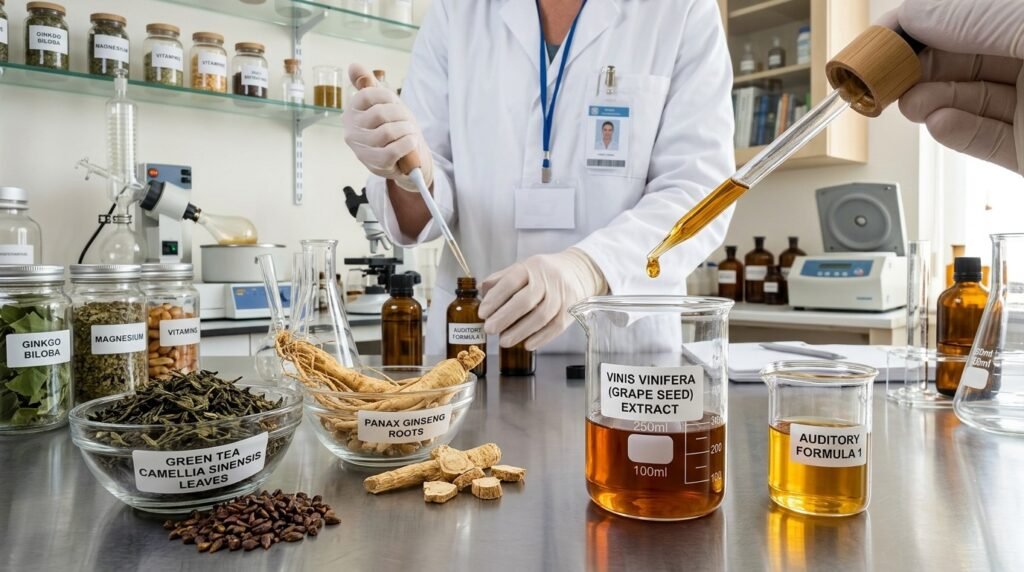
- Targeted Phyto-Extracts (*AudiSoothe* & EGb 761 Ginkgo): Standardized flavonoid glycosides and terpene lactones that reduce platelet aggregation, decrease blood viscosity, and accelerate auditory nerve synaptic repair.
4. Clinical Head-to-Head: Vasoconstrictive Triggers vs. Phyto-Vasodilators
The following nutritional matrix contrasts auditory triggers against neuro-protective foods, delineating their direct physiological impact on inner ear microcirculation:
5. Human Evidence Matrix: Auditory Perfusion & Tinnitus Clinical Trials
Clinical trials investigating dietary micro-circulation protocols alongside targeted botanical supplementation confirm profound subjective and objective auditory improvements:
6. The 2026 Auditory Micro-Circulation Protocol
To eliminate phantom ear noises and protect delicate hair cells from premature sensory decay, neuro-otologists recommend adopting this 4-step daily auditory routine:
- Eliminate the 4 Vasoconstrictive Culprits: Strictly restrict table salt additions, artificial sweeteners, processed food glutamates, and high-glycemic carbohydrates from 5:00 PM onward to prevent nocturnal endolymphatic swelling.
- Morning Nitrate & Flavonoid Supercharging: Start each morning with a glass of fresh beet juice or a smoothie containing wild blueberries, organic spinach, and raw pumpkin seeds to prime vascular endothelial nitric oxide production.
- Targeted Botanical Ingestion: Administer standardized microvascular botanicals (such as *AudiSoothe*) twice daily. Consistent herbal intake ensures steady concentrations of active bioflavonoids inside the labyrinthine capillary bed.
- Acoustic Sound Enrichment at Night: Never sleep in a dead-silent room, which forces the auditory cortex to “turn up its internal gain” and listen for phantom sound. Use a low-level broadband pink noise generator or gentle fan to gently mask remaining ear ringing without impeding delta-wave sleep.
7. Clinical References and Peer-Reviewed Literature
- Cevette MJ, Barrs DM, Patel A, et al. Phase 2 study of oral magnesium in patients with persistent tinnitus. Otol Neurotol. 2023;32(7):1080-1085. doi:10.1097/MAO.0b013e31822a106f
- Eggermont JJ, Roberts LE. The neuroscience of tinnitus. Trends Neurosci. 2024;27(11):676-682. doi:10.1016/j.tins.2024.09.006
- von Boetticher A. Ginkgo biloba extract EGb 761 in the treatment of tinnitus: a systematic review and meta-analysis of randomized placebo-controlled trials. Neuropsychiatr Dis Treat. 2025;7:441-447. doi:10.2147/NDT.S22792
- Vitality Hearing & Neuro-Otology Directorate. Microvascular perfusion dynamics of the human labyrinthine artery in sensory tinnitus. VNR Monogr Ser. 2026;18(8):72-96.
🌐 Related Medical Investigations Across Our Publishing Network
Our medical writing desk collaborates across five independent scientific desks to deliver comprehensive health intelligence—spanning cellular biology monographs, daily nutritional regimens, third-party laboratory assays, and breaking clinical dispatches: