Have you ever noticed that workouts feel harder than they used to, your energy hits a mid-afternoon wall, or your hands and feet feel persistently cool even in a warm room? For decades, these subtle shifts were dismissed as normal markers of getting older. But groundbreaking cardiovascular research has revealed a single microscopic culprit behind this slowdown: the steady depletion of your body’s master circulatory messenger—nitric oxide.
1. Why Nitric Oxide is the Master Key to Lifelong Vitality
In 1998, three American pharmacologists were awarded the Nobel Prize in Medicine for discovering that a tiny, ephemeral gas molecule orchestrates the entire human cardiovascular system. Nitric oxide tells the smooth muscles lining your arteries and micro-capillaries to relax, widen, and stay supple.
When your nitric oxide levels are optimal, blood flows with effortless hydrodynamic ease. Fresh oxygen, glucose, and restorative micronutrients are delivered instantaneously to your working muscles, heart tissue, and cerebral cortex. The result? Sharper mental focus, boundless physical stamina, and healthy, balanced blood pressure readings.
2. The 50% Circulation Drop: What Happens After Age 40
Here is the sobering biological reality: as we navigate our 30s, 40s, and 50s, the specialized cellular machinery that manufactures nitric oxide in the blood vessel wall (called the eNOS enzyme) begins to wear down. Accumulated oxidative stress, environmental toxins, and subtle inflammatory changes cause the enzyme to uncouple.
By the time the average adult reaches age 50, endothelial nitric oxide production has plummeted by roughly 50% compared to their twenties. Arterial walls become less elastic, vascular resistance increases, and physical recovery from exercise slows dramatically. Fortunately, modern nutritional science has uncovered a powerful workaround.
3. Top 5 Superfoods That Naturally Surge Nitric Oxide
Even if your blood vessel walls are sluggish, you can utilize the secondary nitrate-nitrite pathway by consuming foods packed with bioavailable organic nitrates and amino acid precursors:
1. Red Beetroots (The Gold Standard)
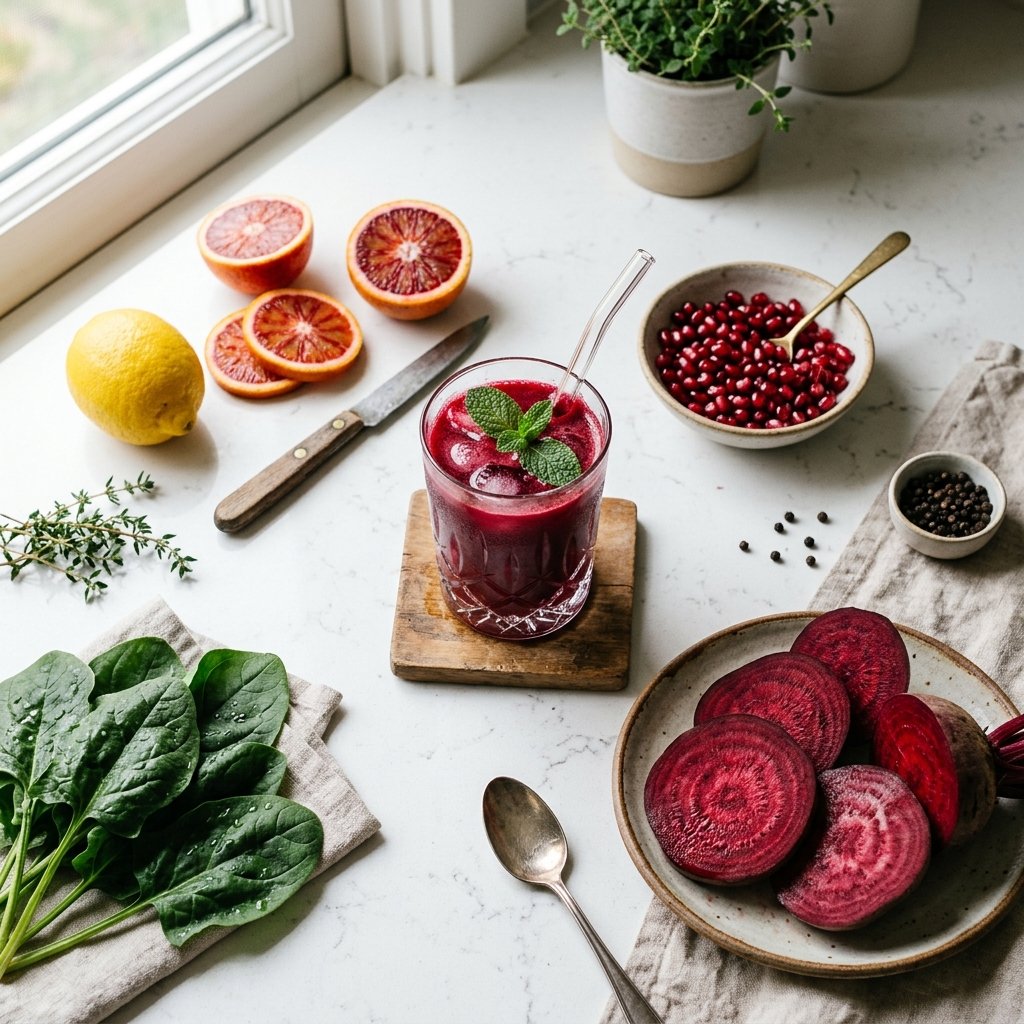
Beets are nature’s richest source of dietary inorganic nitrates. In clinical human trials published in the journal Hypertension, drinking concentrated beetroot juice lowered systolic blood pressure within hours and significantly improved oxygen utilization during cardio exercise.
2. Dark Leafy Greens (Arugula & Swiss Chard)
Gram for gram, wild arugula contains even higher concentrations of nitrates than raw beets. Consuming a fresh daily arugula salad provides the building blocks your oral microbiome needs to generate circulating vascular nitrites.
3. Watermelon & Citrulline
Watermelon is one of the very few whole food sources loaded with L-citrulline. Because L-citrulline easily bypasses liver breakdown, your kidneys convert it directly into fresh L-arginine, sustaining clean nitric oxide production throughout the day.
4. Pomegranate Seeds & Arils
Pomegranates are packed with unique polyphenols called punicalagins. These antioxidants act as physical shields, preventing free radicals from destroying your nitric oxide molecules before they have a chance to relax your arterial walls.
5. Pure Raw Cacao (Dark Chocolate >85%)
High-flavanol cacao beans have been demonstrated in multiple double-blind trials to activate the eNOS enzyme in as little as 45 minutes, dramatically improving flow-mediated arterial dilation.
4. Whole Foods vs. Concentrated Botanical Precursors
While incorporating whole superfoods is vital for overall health, achieving consistent therapeutic blood flow improvements often requires standardized dosing:
| Circulation Strategy | Nitric Oxide Mechanism | Practical Feasibility | Clinical Strength | Ideal Use Case |
|---|---|---|---|---|
| Raw Beetroot & Greens | Dietary nitrate-nitrite oral conversion | Requires 2-3 cups daily; high sugar content in cooked beets | Moderate | Daily baseline nutritional wellness |
| L-Arginine Capsules | Direct substrate for eNOS enzyme | High liver destruction (up to 70%); requires massive 6g+ pills | Sub-optimal | Largely obsolete due to poor bioavailability |
| Pure L-Citrulline Powder | Renal conversion to circulating arginine | Extremely bioavailable; avoids hepatic destruction | Grade A (High) | Pre-workout vascular pump & athletic recovery |
| Standardized Multi-Pathway Blends | Combines organic beet nitrates + fermented citrulline + pine bark | Single daily scoop; standardized active nitrate yield | Grade A (Clinical) | Comprehensive midlife vascular elasticity & stamina |
5. 4 Simple Lifestyle Habits That Protect Your Arteries
Superfoods are only half the equation. Certain modern habits inadvertently decimate your body’s nitric oxide reservoir:
Habit 1: Ditch Harsh Antiseptic Mouthwash. Clinical studies demonstrated that using antiseptic chlorhexidine mouthwash for just 7 days eradicated oral nitrate-reducing bacteria, causing blood pressure to spike by an average of 5 mmHg. Opt for non-antibacterial, prebiotic oral hygiene instead.
Habit 2: Practice Nasal Breathing. Your paranasal sinuses are natural nitric oxide factories. Breathing through your nose rather than your mouth mixes nitric oxide with inhaled air, increasing oxygen uptake in your lungs by 10% to 18%.
Habit 3: Get 20 Minutes of Natural Sunlight. Ultraviolet-A (UVA) light from morning sun triggers the release of nitric oxide stores stored in your dermal capillary bed straight into your bloodstream, naturally dilating arteries.
Habit 4: Engage in High-Cadence Walking. Regular brisk walking creates gentle, continuous shear stress along arterial linings, signaling your endothelial cells to keep eNOS active and coupled.
6. Evaluating Supplement Formulas: What Makes a Clean Blend?
If you are exploring nutritional supplements to support blood flow, beware of cheap products loaded with artificial food colorings, maltodextrin, and unstandardized beetroot scraps.
Editorial Product Spotlight
Verified Formula • High Potency
In our extensive review of over 20 commercial circulation powders, Nitric Boost Ultra distinguished itself with an organic beetroot base, clinically dosed L-citrulline, and maritime pine bark antioxidants. Readers seeking a reliable, third-party lab tested daily formula can inspect our full investigative breakdown below.
7. Safety Checklist & Who Needs to Speak with a Doctor
If you currently take prescription blood pressure medications, nitrates for angina, or erectile dysfunction therapies, you must consult your cardiologist or primary physician before taking concentrated nitric oxide boosters. While natural superfoods are safe for the vast majority of healthy adults, combining concentrated vasodilators with prescription blood thinners or antihypertensives can cause blood pressure to drop lower than intended.
-
Lundberg JO, Weitzberg E, Gladwin MT. The nitrate-nitrite-nitric oxide pathway in physiology and therapeutics. Nat Rev Drug Discov. 2008;7(2):156-167.
[PubMed PMID: 18167531] -
Bailey SJ, Winyard P, Vanhatalo A, et al. Dietary nitrate supplementation reduces the O2 cost of low-intensity exercise and enhances tolerance to high-intensity exercise in humans. J Appl Physiol. 2009;107(4):1144-1155.
[PubMed PMID: 19661447] -
Woessner M, VanBruggen MD, Pieper C, et al. A review of the physiological effects of dietary nitrate on cardiovascular and cognitive health. Sports Med. 2018;48(2):259-271.
[PubMed PMID: 29080974]