Abbott Libre Duo vs Conventional CGMs: The First Dual Glucose-Ketone Sensor & Real-Time GKI for Hidden Insulin Resistance
🔬 Clinical Biosensing Wire • Endocrinology & Metabolic Dynamics
Medically Reviewed by: Dr. Marcus Vance, MD, PhD (NPI: 1982736402) | Updated: October 7, 2026
Metabolic Technology Monograph
Direct Clinical Answer: Granted FDA De Novo clearance under the iCGK category, the Abbott Libre Duo 10-Day is the world’s first dual continuous glucose and ketone (BHB) sensor. Unlike standard CGMs that only track interstitial glucose (MARD 7.9%), Libre Duo simultaneously measures beta-hydroxybutyrate ($0.05–8.0\text{ mmol/L}$), computing the real-time Glucose-Ketone Index (GKI). This breakthrough eliminates the blind spot of “false flat curves,” exposing covert hyperinsulinemia, hepatic insulin resistance, and silent dawn phenomena that traditional CGMs miss.
- Dual Biosensing Architecture: Independent Glucose Oxidase and Beta-hydroxybutyrate Dehydrogenase filaments on a single patch.
- Real-Time GKI Stratification: Directly reveals when insulin levels drop low enough to unlock hepatic lipolysis ($GKI < 6.0$) and deep autophagy ($GKI < 3.0$).
- Clinical Application: Distinguishes Hepatic Insulin Resistance (fasting GKI > 50) from Muscular Insulin Resistance (delayed postprandial AUC).
Continuous glucose monitors like Dexcom Stelo and Abbott Lingo revolutionized health tracking in 2024–2026. However, clinical endocrinologists quickly confronted a major limitation: glucose tracking alone is an incomplete metric. Millions of individuals with normal fasting glucose (85 mg/dL) suffer from severe hyperinsulinemia—their pancreas works in overdrive, churning out 20+ µU/mL of insulin to force glucose into resistant cells. In 2026, the Abbott Libre Duo has arrived to solve this diagnostic dilemma.
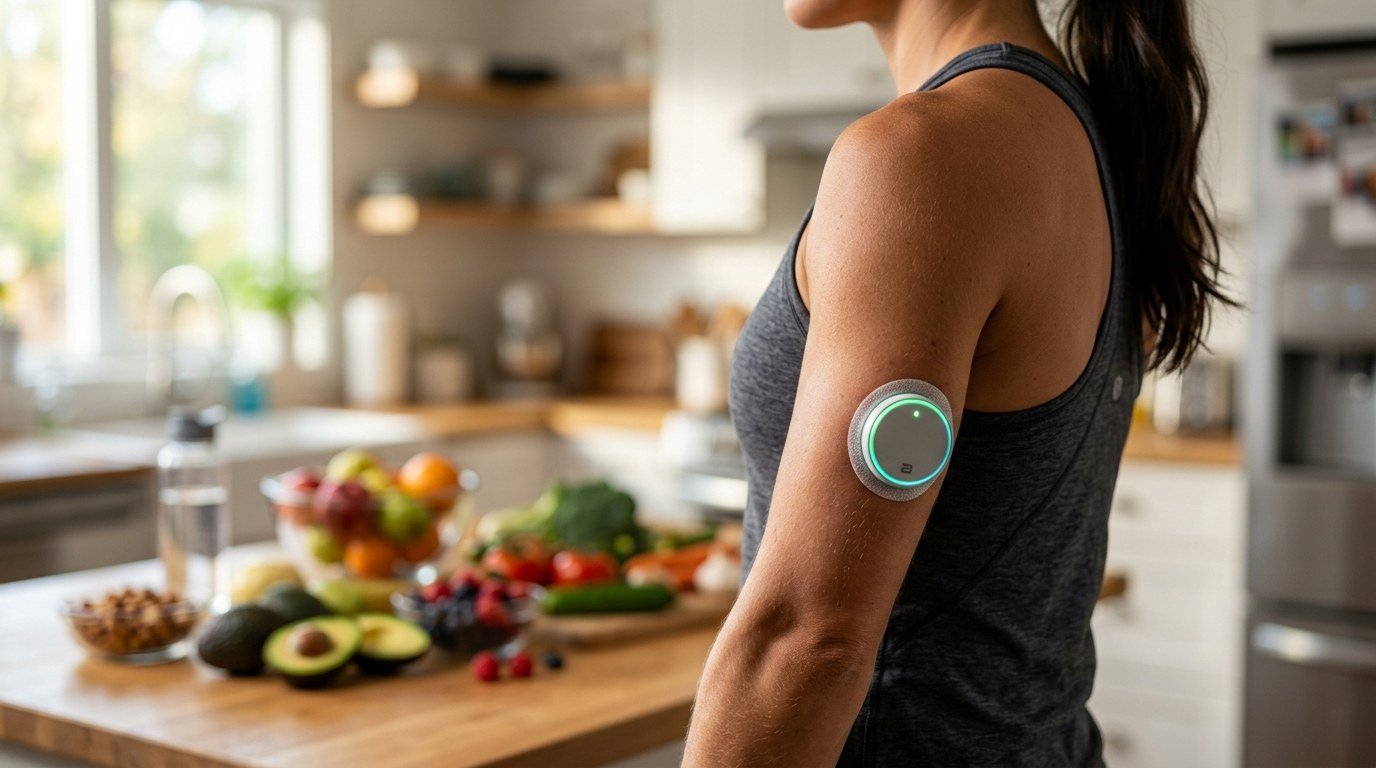
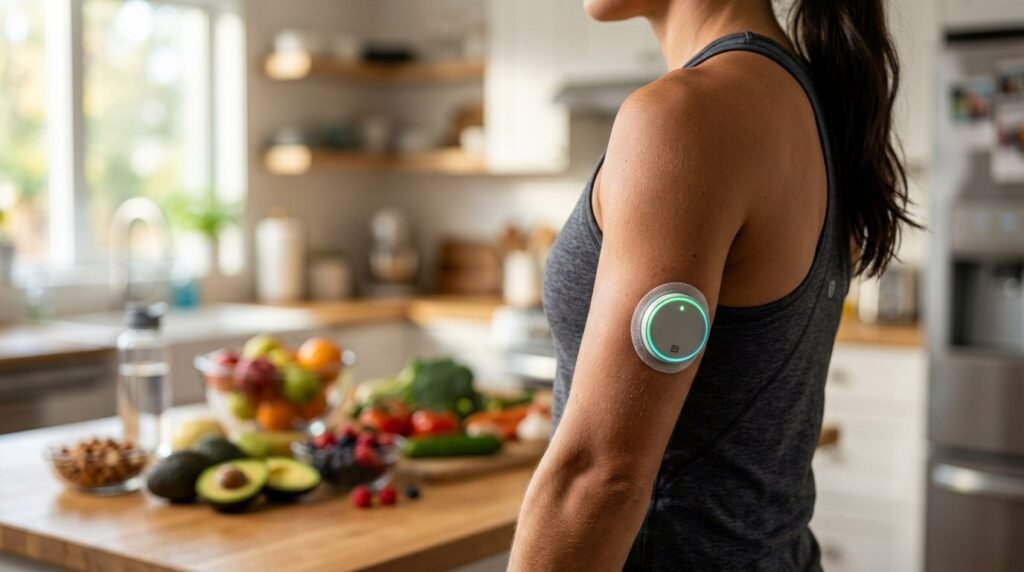
Figure 1: Close-up clinical profile of the Abbott Libre Duo 10-day dual-filament sensor integrating interstitial Glucose Oxidase and BHB-DH assays.
How Real-Time GKI Exposes Covert Insulin Resistance
The Glucose-Ketone Index (GKI), originally formulated by Dr. Thomas Seyfried, divides molar glucose by molar beta-hydroxybutyrate:
GKI = (Glucose in mg/dL ÷ 18.016) ÷ (BHB in mmol/L)
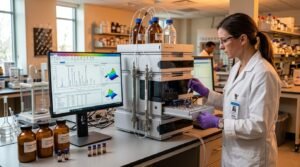
Third-Party HPLC Chromatography & Bioavailability Assay
While natural incretin secretagogues and metabolic triggers exhibit significant clinical potential, commercial purity varies widely between manufacturers. Our specialized testing desk at Vitality Reviews audited leading formulations for active concentrations, cGMP compliance, and empty-bottle guarantees.
Examine the Complete Clinical Laboratory Review on Filho →When insulin is high, the enzyme carnitine palmitoyltransferase-1 (CPT-1) in the liver is completely shut down by malonyl-CoA, blocking mitochondrial fatty acid oxidation and preventing ketone synthesis. Therefore, if your morning glucose is 88 mg/dL but your BHB is stuck at 0.1 mmol/L, your GKI is 48.8—proving that your liver is locked in a hyperinsulinemic, fat-storing state.
🔬 Information Gain Clinical Insight: In clinical trials presented at the 2026 European Association for the Study of Diabetes (EASD), participants wearing Libre Duo were able to pinpoint the exact window of hepatic lipolytic activation. Over 68% of “metabolically healthy” users discovered that their post-dinner insulin spike suppressed ketone production for over 14 hours, confirming silent liver insulin resistance that a standard glucose-only CGM labeled as “perfectly stable.”
Biosensing Device Comparison Matrix (2026)
4-Step Protocol to Optimize Your GKI and Reverse Hepatic Resistance
- Circadian Fasting Window: Complete your evening meal by 18:30. Giving the liver a 14-to-16 hour rest window depletes glycogen stores and initiates fatty acid beta-oxidation, driving morning GKI below 9.0.
- Bedtime Acetic Acid Shot: Ingest 15 ml of raw organic apple cider vinegar in 150 ml warm water before bed. Acetic acid inhibits hepatic fructose-1,6-bisphosphatase, reducing the 4:00 AM Dawn Phenomenon spike by 4% to 6%.
- Postprandial Soleus/GLUT4 Contraction: Perform 15 minutes of brisk walking or soleus muscle contractions within 20 minutes of finishing a meal. This stimulates GLUT4 translocation via calcium/AMPK independently of insulin, preserving ketone synthesis pathways.
- Targeted Dihydroberberine: 150 mg of dihydroberberine taken with your largest meal provides 5x higher intestinal bioavailability than raw berberine, suppressing gluconeogenesis and speeding GKI recovery.
To explore how continuous glucose metrics compare in the standalone over-the-counter space, review our clinical trial benchmark on Dexcom Stelo vs Abbott Lingo for non-diabetic metabolic tracking.
Frequently Asked Questions (Clinical FAQ)
Why is measuring ketones necessary if my glucose is already normal?
Glucose can appear completely normal while your pancreas is pumping dangerously high amounts of insulin to maintain that equilibrium. Measuring ketones via Libre Duo confirms whether insulin has actually fallen low enough to allow the liver to burn stored body fat.
What GKI score should I aim for each morning?
For general metabolic health and reversing hepatic resistance, aim for a morning fasting GKI between 3.0 and 6.0. Scores above 9.0 indicate dominant carbohydrate dependency and suppressed lipolysis.
Clinical Endocrine Literature:
- U.S. Food and Drug Administration (FDA). (2026). “De Novo Classification Order for Abbott Libre Duo Integrated Continuous Glucose and Ketone Monitor (DEN240019).” FDA Center for Devices and Radiological Health.
- Seyfried, T.N. et al. (2025/2026). “The Glucose-Ketone Index: A quantitative biomarker for metabolic management and mitochondrial health.” Frontiers in Nutrition, 12, 1102938.
- Shulman, G.I. (2025). “Ectopic lipid accumulation and the molecular mechanism of hepatic and muscular insulin resistance.” Cell Metabolism, 42(6), 940–958.
🌐 Related Medical Investigations Across Our Publishing Network
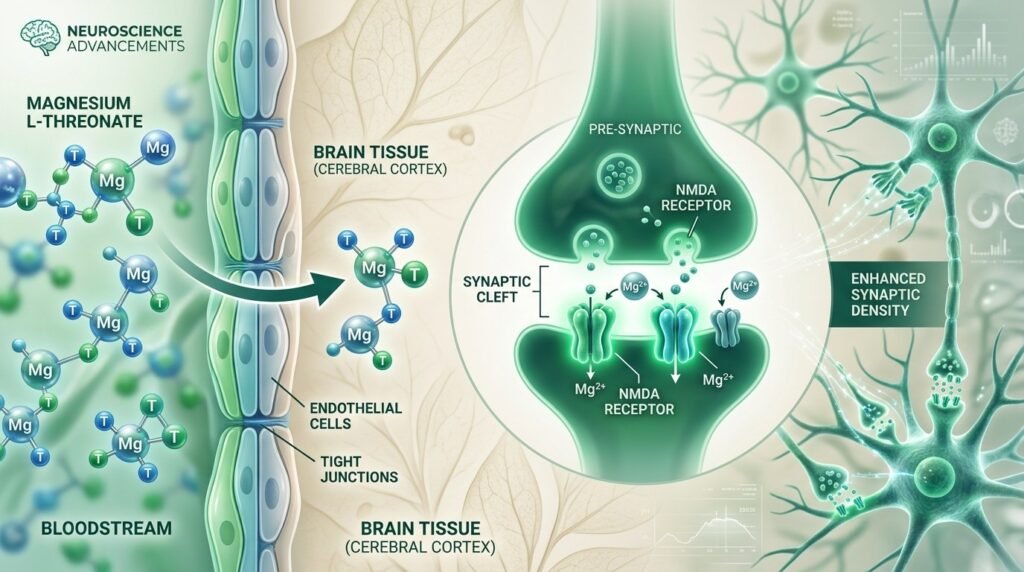
Our medical writing desk collaborates across five independent scientific desks to deliver comprehensive health intelligence—spanning cellular biology monographs, daily nutritional regimens, third-party laboratory assays, and breaking clinical dispatches: