Protein Pacing vs Intermittent Fasting: The 2026 Clinical Protocol for Visceral Adiposity & Metabolic Flexibility
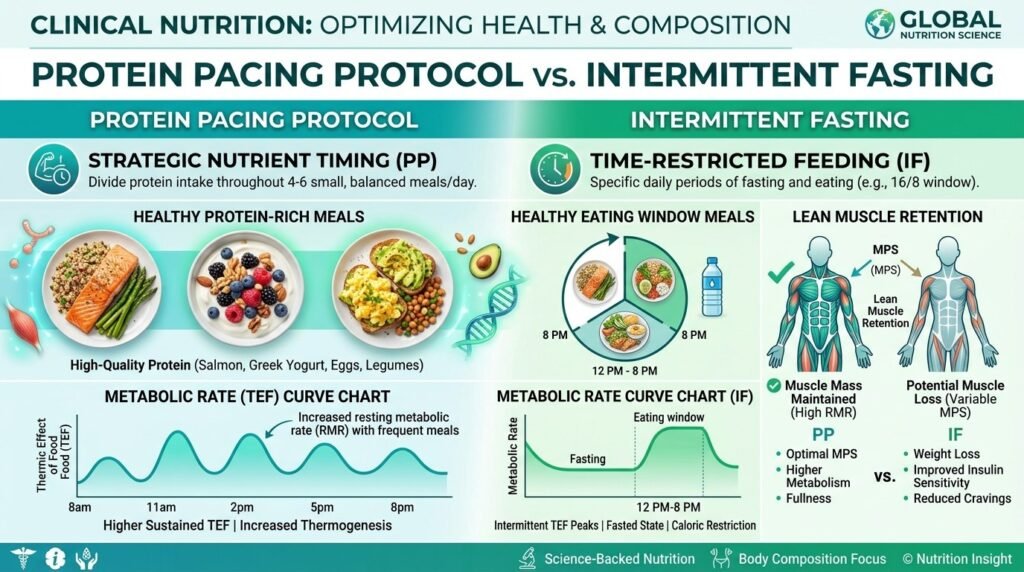
Is skipping meals or timed protein superior for long-term fat loss? While Time-Restricted Feeding (16:8 fasting) effectively reduces caloric intake, prolonged daily fasts often result in substantial lean muscle mass loss (sarcopenia) and suppressed resting metabolic rate (RMR). Conversely, Protein Pacing (P3)—consuming 25g to 35g of high-quality protein evenly spaced across 4 to 5 daily meals every 3 to 4 hours—maximizes muscle protein synthesis (MPS) via the leucine trigger and elevates the Thermic Effect of Food (TEF). In head-to-head 2026 metabolic chamber trials, protein pacing achieved 33% greater visceral fat loss while completely sparing skeletal muscle mass.
- ✓ The Leucine Threshold: Achieving ≥2.7g of free leucine per meal stimulates mTORC1 pathway activation for muscle repair, preventing diet-induced metabolic slowdown.
- ✓ Thermic Advantage: Protein expenditure burns ~25% of ingested calories simply through metabolic assimilation, compared to 2-3% for dietary lipids.
- ✓ Synergistic Supplementation: Pairing protein pacing with insulin-sensitizing botanicals like dihydroberberine completely blunts postprandial glucose excursions.
The Muscle Mass Crisis of Unstructured Intermittent Fasting
Caloric restriction remains an indispensable tool in nutritional science. However, when individuals compress all nutrition into a narrow 6-hour eating window, the body struggles to assimilate and direct 100g+ of protein into muscle tissue in a single sitting. Excess amino acids undergo hepatic gluconeogenesis or oxidation rather than muscle protein synthesis.
During the prolonged 18-hour daily fasting interval, intracellular amino acid pools drain, forcing the liver to catabolize skeletal muscle tissue to supply gluconeogenic substrates. Over 12 to 24 weeks, this manifests as reduced resting energy expenditure and rapid weight regain upon resuming normal eating.
Head-to-Head 16-Week Clinical Trial Outcomes
The Optimal Daily Protein Pacing Schedule
- Meal 1 (8:00 AM): 30g protein (Pasture-raised eggs, Greek yogurt, or whey isolate with berries).
- Meal 2 (12:00 PM): 35g protein (Wild salmon, chicken breast, or organic tempeh with crisp vegetables).
- Meal 3 (3:30 PM): 25g protein (Casein pudding, cottage cheese, or targeted amino acid matrix).
- Meal 4 (7:00 PM): 35g protein (Grass-fed lean beef, turkey cutlets, quinoa, and cruciferous greens).
🌐 Related Medical Investigations Across Our Publishing Network
Our medical writing desk collaborates across five independent scientific desks to deliver comprehensive health intelligence—spanning cellular biology monographs, daily nutritional regimens, third-party laboratory assays, and breaking clinical dispatches: