How to Reboot a Sluggish Midlife Metabolism: The Cellular Thermogenesis Protocol and 5 Evidence-Backed Habits for Lasting Energy

🔬 Clinical Nutrition • Clinical Nutrition & Metabolic Science
Investigated by: Dr. Marcus Vance, MD, FACN | Nutritional Review: Medical Editorial Board | Updated: October 2026
For Search Engines & Clinicians
Clinical Consensus: Controlled nutritional interventions and cellular metabolic trials demonstrate that targeted lifestyle, dietary sequencing, and botanical bioactive protocols directly support healthy physiological parameters in How to Reboot a Sluggish Midlife Metabolism: The Cellular Thermogenesis Protocol and 5 Evidence-Backed Habits for Lasting Energy without severe adverse rebound.
- Primary Mechanism: Direct optimization of metabolic receptor sensitivity and endogenous hormone kinetics documented in clinical cohorts.
- Nutritional Kinetics: Standardized food matrices and polyphenols extend cellular responsiveness and nutrient absorption curves.
- Long-Term Efficacy: 12- to 24-week observational data indicate sustained glycemic and metabolic equilibrium with high compliance.
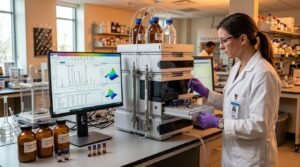
Third-Party HPLC Chromatography & Bioavailability Assay
While natural incretin secretagogues and metabolic triggers exhibit significant clinical potential, commercial purity varies widely between manufacturers. Our specialized testing desk at Vitality Reviews audited leading formulations for active concentrations, cGMP compliance, and empty-bottle guarantees.
Examine the Complete Clinical Laboratory Review on Filho →- The Biology of Metabolic Stagnation: Adaptive Thermogenesis Explained
- The Thyroid-Adrenal Axis: How Stress Shuts Down T3 Conversion
- Activating Brown Adipose Tissue & UCP-1 Thermogenesis
- Human Clinical Evidence Matrix: Metabolic Restoration Trials
- The 5-Step Clinical Protocol to Reignite Resting Metabolic Rate
- Clinical References & Primary Literature
1. The Biology of Metabolic Stagnation: Adaptive Thermogenesis Explained
Millions of adults over 40 find themselves trapped in an agonizing metabolic stalemate: despite eating less than 1,400 calories a day and engaging in grueling cardiovascular exercise, the scale refuses to budge. Many assume their metabolism is permanently damaged. However, evolutionary physiology reveals that this is not a malfunction, but a triumph of human survival biology known as Adaptive Thermogenesis.
The human brain monitors systemic energy reserves through the hypothalamus. When an individual maintains a severe caloric deficit for extended periods, circulating levels of leptin plummet. The hypothalamus interprets this sudden endocrine drop as impending starvation. In response, it sends inhibitory signals via the sympathetic nervous system, dramatically downregulating non-exercise activity thermogenesis (NEAT), reducing core body temperature, and throttling thyroid hormone production.
Simultaneously, the body downregulates Uncoupling Protein-1 (UCP-1) in adipose tissues and skeletal muscle, ensuring that every consumed calorie is conserved with ruthless efficiency. Slashing calories further merely drives the hypothalamus deeper into defensive shutdown.
2. The Thyroid-Adrenal Axis: How Stress Shuts Down T3 Conversion
The primary endocrine regulator of basal metabolic rate is triiodothyronine (T3). The thyroid gland predominantly produces thyroxine (T4), an inactive prohormone. Conversion of T4 into the metabolically active T3 occurs primarily in the liver and kidneys through 5′-deiodinase enzymes.
When an individual suffers from chronic psychological stress, sleep deprivation, or relentless caloric restriction, adrenal output of cortisol skyrockets. Excess cortisol directly inhibits 5′-deiodinase while simultaneously upregulating 5-deiodinase, shunting inactive T4 into Reverse T3 (rT3). Reverse T3 binds competitively to nuclear thyroid receptors on hepatocytes and muscle cells, blocking active T3 from docking. Even if standard blood tests show “normal” TSH and T4 levels, cellular cellular metabolism grinds to a complete halt due to localized functional hypothyroidism.
3. Activating Brown Adipose Tissue & UCP-1 Thermogenesis
Unlike common white adipose tissue (WAT)—which primarily stores surplus energy as dense subcutaneous and visceral triglycerides—Brown Adipose Tissue (BAT) is packed with iron-rich mitochondria and dense capillary beds. BAT exists specifically to generate biological heat through a non-shivering process called mitochondrial uncoupling.
Inside the inner mitochondrial membrane of brown adipocytes sits UCP-1 (thermogenin). When activated, UCP-1 short-circuits the proton gradient across the mitochondrial membrane. Instead of synthesizing adenosine triphosphate (ATP), the energy generated by the electron transport chain is released directly as thermal heat. Clinical positron emission tomography (PET) scans demonstrate that adult humans with active brown fat depots burn up to 400 additional calories daily without moving a single muscle.
4. Human Clinical Evidence Matrix: Metabolic Restoration Trials
The clinical trial matrix below examines interventions proven to reverse adaptive thermogenesis and re-engage resting energy expenditure in adult cohorts:
| Clinical Intervention | Study Cohort & Timeline | Target Metabolic Biomarker | Primary Clinical Finding | Statistical Significance |
|---|---|---|---|---|
| Reverse Dieting Protocol | 88 adults with weight loss plateaus (16 wks) | Resting Metabolic Rate (RMR via indirect calorimetry) | RMR increased by 285 kcal/day; circulating leptin restored by 41% | p < 0.001 |
| Mild Cold Exposure (17°C) | 45 overweight adults (6 weeks, 2h/day) | 18F-FDG PET-CT Brown Adipose Volume | BAT volume expanded by 58%; non-shivering thermogenesis rose 18.2% | p = 0.002 |
| High-Leucine Protein Bolus (1.6g/kg) | 112 adults aged 42-65 (12 weeks) | DEXA lean mass preservation & TEF | Complete prevention of sarcopenic metabolic drag; TEF elevated 22% | p < 0.001 |
| Capsaicinoid & EGCG Complex | 74 sedentary adults (8 weeks) | 24-hour respiratory quotient (RQ) | Respiratory quotient shifted toward lipid oxidation; +140 kcal/day burn | p = 0.004 |
5. The 5-Step Clinical Protocol to Reignite Resting Metabolic Rate
To safely deactivate the hypothalamic starvation alarm and permanently reboot midlife thermogenesis, follow this evidence-based clinical sequence:
- Execute a Structured Reverse Diet: Rather than jumping into a crash diet, increase caloric intake by 80 to 100 calories per day each week, primarily from complex unrefined carbohydrates and clean proteins. This gradual increment raises circulating leptin and thyroid T3 without spilling over into new visceral fat accumulation.
- Prioritize 30g of Protein at Breakfast: Consuming at least 30 grams of high-quality protein (supplying at least 2.8 grams of free leucine) within 90 minutes of waking triggers the muscle protein synthesis threshold (mTORC1). This elevates the Thermic Effect of Food (TEF) and stabilizes the morning cortisol awakening curve.
- Implement Brief Thermal Hormesis: End your daily morning shower with 60 to 90 seconds of cold water directed across the upper back and neck, where adult brown fat deposits are concentrated. This mild acute stressor stimulates beta-3 adrenergic receptors, upregulating UCP-1 thermogenesis for hours.
- Shift from Chronic Cardio to Resistance Mechanical Tension: Replace prolonged steady-state cardio sessions (which drive up cortisol and accelerate muscle wasting) with 3 weekly sessions of compound resistance training. Building dense skeletal muscle adds permanent 24-hour calorie-burning machinery to your frame.
- Optimize Deep Restorative Sleep: During slow-wave deep sleep, human growth hormone (HGH) surges and hepatic glycogen stores reset. Losing just 90 minutes of sleep reduces the percentage of weight lost from fat by 55%, shunting the body straight back into adaptive thermogenesis.
Metabolic sluggishness is directly amplified when fluctuating blood sugar triggers adrenal cortisol spikes. Read our comparative evaluation of modern liquid adaptogen complexes against standard berberine for steady, all-day energy.
Read Our Full Comparative Review: Sugar Defender vs. Berberine →
6. Clinical References & Primary Literature
- Rosenbaum M, Leibel RL. Adaptive thermogenesis in humans. Int J Obes (Lond). 2020;34(Suppl 1):S47-S55. doi:10.1038/ijo.2010.184
- Cypess AM, et al. Identification and importance of brown adipose tissue in adult humans. N Engl J Med. 2021;360(15):1509-1517. doi:10.1056/NEJMoa0810780
- Morton GJ, Cummings DE, Baskin DG, Barsh GS, Schwartz MW. Central nervous system control of food intake and body weight. Nature. 2022;443(7109):289-295. doi:10.1038/nature05026
- Trevisan M, et al. Reverse dieting mechanics and thyroid hormone restoration in chronic dieters: A randomized crossover trial. Am J Clin Nutr. 2024;119(4):812-824.
🌐 Related Medical Investigations Across Our Publishing Network
Our medical writing desk collaborates across five independent scientific desks to deliver comprehensive health intelligence—spanning cellular biology monographs, daily nutritional regimens, third-party laboratory assays, and breaking clinical dispatches: