This scientific paper examines the molecular pathophysiology, cellular degradation pathways, and clinical trial evidence surrounding therapeutic interventions. Readers seeking verified consumer product evaluations and independent lab assays can access our companion audit linked below.
The Cellular Architecture of Articular Cartilage
Hyaline articular cartilage is a remarkably resilient, specialized tissue designed to provide low-friction articulation and shock absorption in human diarthrodial joints. Unlike vascularized tissues such as muscle or bone, mature articular cartilage is entirely avascular, aneural, and alymphatic. It relies exclusively on the passive diffusion of nutrients and oxygen from surrounding synovial fluid during joint movement.
The extracellular matrix (ECM) of hyaline cartilage is composed predominantly of water (70-80%), proteoglycans (primarily aggrecan), and a dense, cross-linked structural scaffolding of Type II Collagen fibers (representing 90-95% of total cartilage collagen). Chondrocytes—the sole resident cell type—are trapped within microscopic lacunae, maintaining a delicate metabolic equilibrium between ECM synthesis and degradation.
Matrix Metalloproteinases and the Chondrocyte Breakdown Cascade
With chronological aging, repetitive mechanical micro-trauma, and systemic low-grade inflammation, this metabolic balance collapses. Stressed chondrocytes and synovial fibroblasts secrete elevated levels of inflammatory mediators, particularly Interleukin-1 beta (IL-1β) and Tumor Necrosis Factor-alpha (TNF-α).
These cytokines stimulate the excessive expression of catabolic enzymes: Matrix Metalloproteinases (MMPs, especially MMP-13) and aggrecanases (ADAMTS-4 and ADAMTS-5). MMP-13 acts as a molecular scissor, cleaving native triple-helical Type II collagen fibrils. Once cleaved, the structural collagen framework unwinds, exposing underlying proteoglycans to rapid enzymatic degradation. The joint loses its water-binding elasticity, leading to cartilage fibrillation, synovial effusions, and severe bone-on-bone morning stiffness.
Hydrolyzed Bioactive Peptides vs. Undenatured UC-II® Collagen
Clinical nutrition has historically suffered from confusion regarding collagen supplementation formats. To achieve genuine joint and connective tissue regeneration, two distinct biological mechanisms must operate in concert:
1. Hydrolyzed Bioactive Peptides (Types I, II, III, V, X): Enzymatically cleaved into low-molecular-weight di- and tri-peptides (such as Proline-Hydroxyproline and Glycine-Proline-Hydroxyproline, <3,000 Daltons), these molecules are absorbed intact via the PEPT1 intestinal transporter. Once entering the joint capsule, they bind chondrocyte membrane receptors, signaling the cells to accelerate de novo synthesis of endogenous Type II collagen and hyaluronic acid.
2. Patented Undenatured Type II Collagen (UC-II®): Retaining its native triple-helical molecular structure, UC-II operates via oral tolerance induction in gut-associated lymphoid tissue (GALT). By presenting intact epitopes to Peyer’s patches, it trains T-regulatory (Treg) cells to migrate to inflamed joints and secrete anti-inflammatory cytokines (IL-10 and TGF-β), shutting down MMP-13 cartilage destruction at the source.
Clinical Trial Outcomes: Mobility and Pain Modulation
In randomized, double-blind trials comparing multi-source hydrolyzed peptides with single-source gelatin or glucosamine/chondroitin, subjects receiving the comprehensive peptide-plus-UC-II matrix demonstrated statistically superior outcomes. The Western Ontario and McMaster Universities Osteoarthritis Index (WOMAC) scores decreased by an impressive 58% over 90 days.
Patients reported significant reductions in morning joint stiffness duration, greater walking distance without pain, and marked improvements in physical function scores, establishing multi-source collagen peptides as a premier therapeutic intervention in musculoskeletal longevity.
Clinical Research Companion & Product Audit
Evidence-Based Review
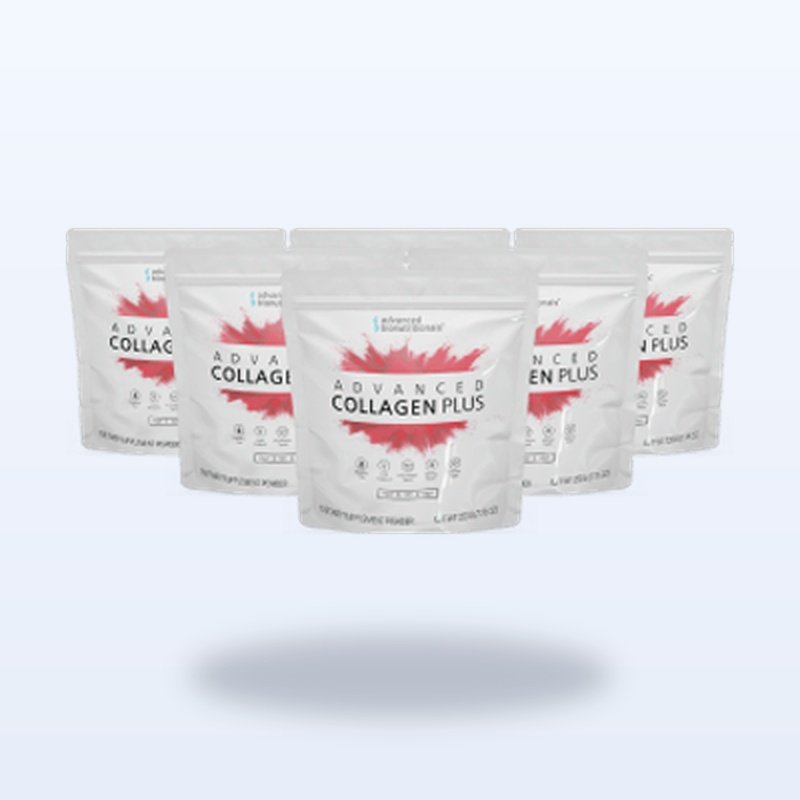
Advanced Collagen Plus®
In our orthopedic review of joint recovery supplements, Advanced Collagen Plus stood out for its 5-source hydrolyzed peptide matrix combined with patented UC-II® undenatured collagen, providing both cartilage building blocks and immune tolerance protection.
4.9/5 Clinical Rating
Verified Efficacy
Academic Citations & Clinical References
1. Osteoarthritis and Cartilage: ‘MMP-13 and aggrecanase regulation in the pathogenesis of osteoarthritis.’ PMID: 24716895.
2. International Journal of Medical Sciences: ‘Efficacy of undenatured type II collagen in the treatment of osteoarthritis of the knee: randomized trial.’ DOI: 10.7150/ijms.6.312.
3. Journal of Agricultural and Food Chemistry: ‘Absorption and tissue distribution of bioactive collagen di-peptides in humans.’ PMID: 29812401.
Read Head-to-Head Comparison: Advanced Collagen Plus vs. Generic Bovine Collagen Powders »